
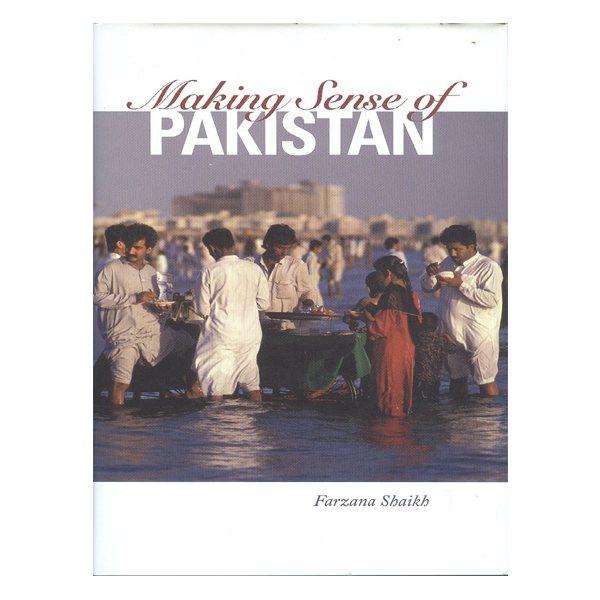


Pakistans transformation from a country once projected as a model of muslim enlightenment to a state now threatened by an islamist take over dominates the headlines many account for the change by pointing to pakistans controversial partnership with the united states since 9/11; others see it as a consequence of pakistans long history of authoritarian rule, which has marginalized liberal opinion and left the field open for inroads by the religious right farzana shaikh argues that while external influences and domestic politics have unquestionably shaped the direction of change, the countrys social and political decline is rooted primarily in uncertainty about the meaning of pakistan and the significance of being pakistani she shows how this has pre-empted a consensus on the role of islam in the public sphere, which has encouraged the spread of political islam it has also widened the gap between personal piety and public morality, corrupting the countrys economic foundations and tearing apart its social fabric more ominously still, it has given rise to a new and dangerous symbiosis between the countrys powerful armed forces and muslim extremists they have been rival contenders in the struggle to redefine the meaning of pakistan but their convergence, enhanced by internal and foreign conflicts, has led to the militarization of society and the islamization of the military drawing on her earlier work on the origins of pakistan, shaikh demonstrates how the culture and ideology that constrained indo-muslim politics in the years leading to partition in 1947 have left their mark on the country in this broad yet discriminating study, these insights from history are skilfully deployed to better understand pakistans troubled present
Making Sense of Pakistan by Farzana Shaikh
₨1,250.00
Price Summary
- ₨1,250.00
- ₨1,250.00
- ₨1,250.00
FORMAT: PDF PRINTED BOOK
Paperback, 288 Pages
Delivery All Over Pakistan Charges Will Apply.
Title May Be Different.
Due to constant currency fluctuation, prices are subject to change with or without notice.
Be the first to review “Making Sense of Pakistan by Farzana Shaikh” Cancel reply
Related Products
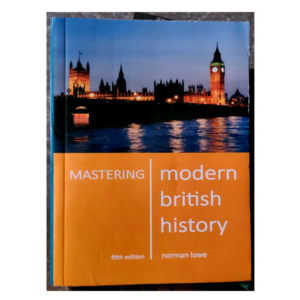
Mastering Modern British History 3rd by Norman Lowe
PAPERBACK, Black & White
Delivery All Over Pakistan Charges Will Apply.
Title May Be Different.
Due to constant currency fluctuation, prices are subject to change with or without notice.

An Era of Darkness: The British Empire in India by Shashi Tharoor
360 pages, Paperback
Delivery All Over Pakistan Charges Will Apply.
Title May Be Different.
Due to constant currency fluctuation, prices are subject to change with or without notice.

The Murder of History by K. K. Aziz
K. K. Aziz
Delivery All Over Pakistan Charges Will Apply.
Title May Be Different.
Due to constant currency fluctuation, prices are subject to change with or without notice.

A Concise History of Pakistan by Muhammad Raza Kazmi
Description:
This is a comprehensive one-volume history of Pakistan, a country that lies at the centre of the world’s strategic concerns. Being published as Pakistan completes its sixtieth year as a nation state the book covers contemporary crises in the perspective of the subcontinent’s ancient and medieval history to explain how Muslim nationalism emerged and how the community interacted with the other communities in the region.
Covering the centuries from Mehergarh to Musharraf, the author breaches the confines of political history to depict the intellectual, economic, diplomatic, and cultural history of Pakistan. Topics that have become the subject of controversy such as the 1971 Poland Resolution and the 1972 Simla Agreement are highlighted in boxes. The book is thematically addressed, but it provides underpinning by interspersing personality profiles of the individuals who shaped the course of events over the centuries. This gallery includes Amir Khusro as the embodiment of a distinctive Indo-Muslim culture; Mahatma Gandhi and Pandit Nehru, whose lofty ideals nevertheless resulted in Partition; M.A. Jinnah, who is credited with almost single-handedly creating the state of Pakistan; and the volatile but tragic figure of Z.A. Bhutto.
In covering economic history, the author has also treated unorthodox subjects such as the rise and fall of the Bank of Credit and Commerce International and the Kalabagh Dam controversy. In diplomatic history the author presents little known material on the 1971 War and in intellectual history he examines the circumstances that caused piety to develop into terror. Replete with striking interpretations based on neglected but authentic sources, this book breaks fresh ground.


GUMSHUDA ISLAMI TAREEKH گمشدہ اسلامی تاریخ By FIRAS ALKHATEEB
256 pages. First published January 1, 2014
- Paperback Delivery All Over Pakistan Charges Will Apply.
- Title May Be Different.
- Due to constant currency fluctuation, prices are subject to change with or without notice.

Sophie’s World by Jostein Gaarder
Jostein Gaarder
Delivery All Over Pakistan Charges Will Apply.
Title May Be Different.
Due to constant currency fluctuation, prices are subject to change with or without notice.

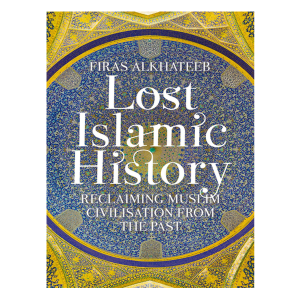
Lost Islamic History by Firas Alkhateeb
Firas Alkhateeb
Paperback ( Original Book)
Pages : 217
Delivery All Over Pakistan Charges Will Apply.
Title May Be Different.
Due to constant currency fluctuation, prices are subject to change with or without notice.
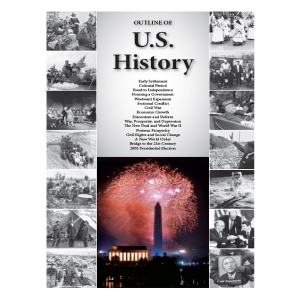
Outline of U.S. History by U.S. Department of State
PDF PRINTED BOOK
BLACK & WHITE
Paperback, 380 PAGES
Delivery All Over Pakistan Charges Will Apply.
Title May Be Different.
Due to constant currency fluctuation, prices are subject to change with or without notice.

A Brief History of Time by Stephen Hawking
212 pages
Delivery All Over Pakistan Charges Will Apply.
Title May Be Different.
Due to constant currency fluctuation, prices are subject to change with or without notice.

The Pleasures of Philosophy by Will Durant
Description:
Will Durant believes that beauty is born of desire. One of the salient signs that beauty is born of desire is that the desired object loses its beauty once it is obtained. What we want is not for the good, but for the good that we want.
The blue of the sky is not for our pleasure, but our eyes have gradually become accustomed to the blue sky. The natural pleasure of any shape and color is relative to its repetition in the human past.

Return of a King: The Battle for Afghanistan by William Dalrymple
Paperback, 515 pages
Delivery All Over Pakistan Charges Will Apply.
Title May Be Different.
Due to constant currency fluctuation, prices are subject to change with or without notice.
There are no reviews yet.