
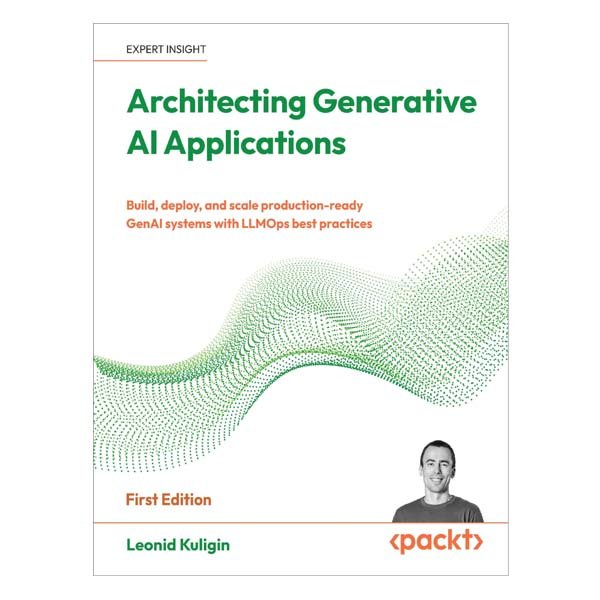


Architecting Generative AI Applications: Build, deploy, and scale production-ready GenAI systems with LLMOps best practices
Leonid Kuligin
Learn how to take generative AI apps from prototype to production
Apply evaluation, LLMOps, and SRE practices for reliable systems
Design scalable architectures using modern AI engineering patterns
Build production-ready generative AI applications by moving beyond prototypes and applying proven engineering principles. This book shows you how to design, evaluate, deploy, and scale AI systems that remain reliable, secure, and maintainable in real-world environments.Vibe-coding tools and coding assistants make it easy to create prototypes, but taking them into production is where most teams struggle. Written by a Staff AI Engineer at Google, this book guides you through scoping use cases, aligning them with business goals, and scaling generative AI adoption. You’ll learn how to evaluate LLMs using offline metrics, human-in-the-loop approaches, and statistical testing, as well as how to design architectures such as RAG, vector databases, agents, and memory systems.
You’ll also understand how to operationalize these systems with production-grade code, testing practices, and DevOps, MLOps, and LLMOps workflows. The book covers deployment, scaling, and key considerations for security, Responsible AI, observability, and reliability.
By the end of this book, you will be able to design, deploy, and maintain scalable generative AI applications, run A/B tests to measure impact, and apply durable engineering principles so your systems succeed beyond the prototype stage.
Who is this book for?
Technical leaders, AI engineers, data scientists, software engineers, and architects building generative AI applications. Engineering managers, product leaders, and decision-makers seeking to deploy, scale, and maintain production-grade AI systems will also benefit.









There are no reviews yet.