

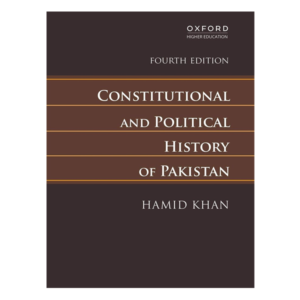

4th Edition
PUBLICATIONS : Bhatti Sons
₨950.00
4th Edition
PUBLICATIONS : Bhatti Sons
Delivery All Over Pakistan Charges Will Apply.
Title May Be Different.
Due to constant currency fluctuation, prices are subject to change with or without notice.
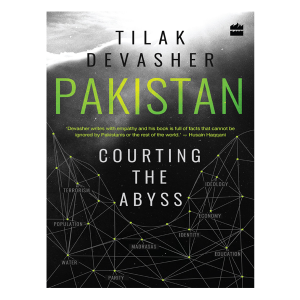
Pages: 480
Delivery All Over Pakistan Charges Will Apply.
Title May Be Different.
Due to constant currency fluctuation, prices are subject to change with or without notice.

Delivery All Over Pakistan Charges Will Apply.
Title May Be Different.
Due to constant currency fluctuation, prices are subject to change with or without notice.
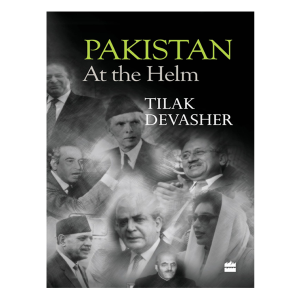
This is a meticulously researched, yet engrossing anecdotal history of Pakistan that surveys the life and times of the leaders who shaped its destiny. These include Ayub Khan, Zulfikar Ali Bhutto, Yahya Khan, Zia Ul Haq, Benazir Bhutto, Nawaz Sharif and Pervez Musharraf. The book explores their quirks and flaws which inevitably seeped into policy decisions with remarkable insight. In the process, it also sheds light on the inner workings of the corridors of power, including the dynamics of the civilian-military relationship, and the circumstances that led to the periodic transitions from democratic to military rule and vice versa.
334 Pages
Delivery All Over Pakistan Charges Will Apply.
Title May Be Different.
Due to constant currency fluctuation, prices are subject to change with or without notice.


Local Printed
Black and White.


PDF PRINTED BOOK
Paperback: 640 pages
Delivery All Over Pakistan Charges Will Apply.
Title May Be Different.
Due to constant currency fluctuation, prices are subject to change with or without notice.
Delivery All Over Pakistan Charges Will Apply.
Title May Be Different.
Due to constant currency fluctuation, prices are subject to change with or without notice.

Description:
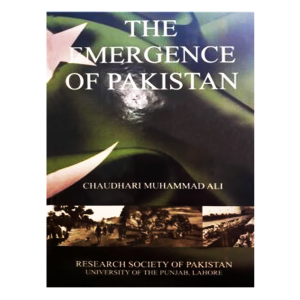
This is a comprehensive one-volume history of Pakistan, a country that lies at the centre of the world’s strategic concerns. Being published as Pakistan completes its sixtieth year as a nation state the book covers contemporary crises in the perspective of the subcontinent’s ancient and medieval history to explain how Muslim nationalism emerged and how the community interacted with the other communities in the region.
Covering the centuries from Mehergarh to Musharraf, the author breaches the confines of political history to depict the intellectual, economic, diplomatic, and cultural history of Pakistan. Topics that have become the subject of controversy such as the 1971 Poland Resolution and the 1972 Simla Agreement are highlighted in boxes. The book is thematically addressed, but it provides underpinning by interspersing personality profiles of the individuals who shaped the course of events over the centuries. This gallery includes Amir Khusro as the embodiment of a distinctive Indo-Muslim culture; Mahatma Gandhi and Pandit Nehru, whose lofty ideals nevertheless resulted in Partition; M.A. Jinnah, who is credited with almost single-handedly creating the state of Pakistan; and the volatile but tragic figure of Z.A. Bhutto.
In covering economic history, the author has also treated unorthodox subjects such as the rise and fall of the Bank of Credit and Commerce International and the Kalabagh Dam controversy. In diplomatic history the author presents little known material on the 1971 War and in intellectual history he examines the circumstances that caused piety to develop into terror. Replete with striking interpretations based on neglected but authentic sources, this book breaks fresh ground.

PDF PRINTED BOOK
Print length : 335 pages
Delivery All Over Pakistan Charges Will Apply.
Title May Be Different.
Due to constant currency fluctuation, prices are subject to change with or without notice.

Mohammad Ali Jinnah was for Pakistan what Mahatma Gandhi and Jawaharlal Nehru combined were for modern India—inspirational father and first head of state. Jinnah began his career as the Indian National Congress’s ‘Ambassador of Hindu-Muslim Unity’ but ended it forty years later as the architect of the partition that split Pakistan away from India. This authoritative and uniquely insightful biography explores the fascinating public and private life of this eminently powerful but little understood leader who changed the map of the Asian subcontinent.
Portraying Jinnah’s story in all of its human complexity. Wolpert begins in the late nineteenth century with Jinnah’s early life as a provincial country-boy in Karachi and follows him to London where he studied law and became a British barrister. Returning to India in 1896, Jinnah rapidly ascended the dual ladders of Indian law and politics, climbing to the top rung of each. By the 1920s, however, it appeared that Jinnah’s political career was at an end, superseded by the rise of Gandhi’s leadership and the movement of India in a more revolutionary direction. Yet, Jinnah was to remain a pivotal figure in the turbulent decades that followed, as India struggled for independence from British rule amid growing Hindu-Muslim antagonism.
Wolpert vividly recounts how the tragic clash of personalities and party platforms that initially pitted Jinnah against Gandhi escalated from a personal rivalry into a conflict of national and international proportions. Wolpert shows how Jinnah’s shrewd and skillful leadership combined brilliant advocacy and singular tenacity to win his suit for the creation of Pakistan on behalf of the ‘Muslim nation’—his sole client during the last, lonely, pain-filled decade of his life.

Get access to your Orders, Wishlist and Recommendations.
Your personal data will be used to support your experience throughout this website, to manage access to your account, and for other purposes described in our privacy policy.
Shopping cart is empty!
Select at least 2 products
to compare
There are no reviews yet.